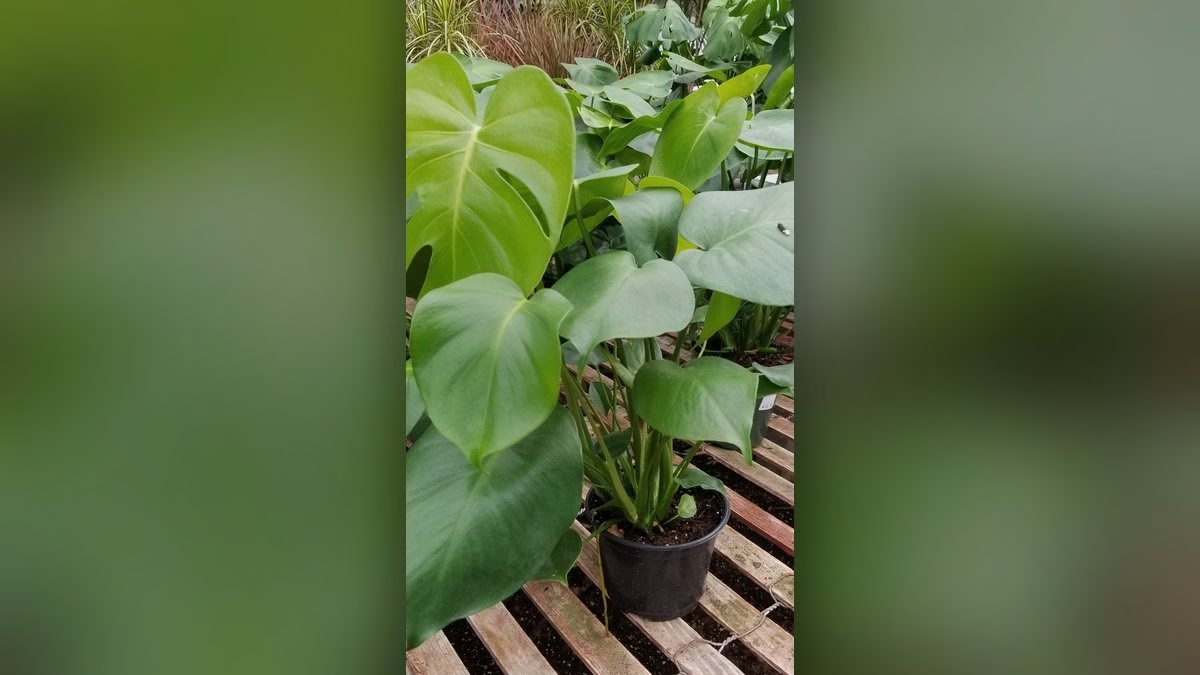
Few houseplants make a room feel lush as quickly as a Swiss cheese plant. The good news is that Monstera deliciosa care is straightforward once you balance generous filtered light with a sensible watering routine and give this tropical climber room to grow.
Native to tropical forests from Mexico into Central America, Monstera is built to climb toward brighter conditions. Indoors, its large, fenestrated leaves create an instant focal point, but those dramatic leaves depend on healthy roots, adequate light, and steady—not soggy—care.
Monstera Deliciosa Care at a Glance
- Light — Bright, indirect light; gentle morning sun is usually acceptable.
- Water — Water thoroughly when the top 1 to 2 inches of potting mix feel dry.
- Soil — An airy, fast-draining aroid mix in a pot with drainage holes.
- Temperature — Warm indoor conditions, protected from cold drafts.
- Humidity — Average household humidity is workable, though moderate to high humidity supports better growth.
- Support — A sturdy stake, plank, or moss pole as the plant matures.
Penn State Extension’s Monstera houseplant guide recommends a site near a sunny window with bright light but no harsh direct sun and notes a comfortable range of roughly 60 to 85°F. That is a useful baseline, but your plant and potting mix should determine when you water—not a fixed calendar.
Give It Bright, Filtered Light
Place your Monstera near an east-facing window or a few feet back from a bright south- or west-facing window. A sheer curtain can soften intense afternoon rays. Rotate the pot a quarter turn every week or two so growth stays balanced rather than leaning strongly toward the glass.
Too little light often produces slow, stretched growth and smaller new leaves. Young plants naturally begin with solid leaves, so a lack of holes is not automatically a problem. As the plant matures, brighter light and climbing support encourage larger leaves with deeper splits. If leaves develop pale, scorched patches, move the plant away from direct midday sun.
Water the Soil, Not the Calendar
Check the potting mix with a finger before reaching for the watering can. When the top 1 to 2 inches are dry, saturate the soil until water drains freely from the bottom, then empty the saucer or cachepot. The University of Minnesota Extension’s Monstera guide likewise advises watering mature plants when that upper layer has dried.
Watering frequency changes with light, temperature, plant size, season, and pot material. A plant in bright summer light may dry quickly, while the same plant may need much longer between waterings in winter. Persistent yellowing, soft stems, or a sour-smelling mix can indicate excess moisture. Curling leaves and very dry soil may signal thirst, but always inspect the soil before diagnosing by leaves alone.
Use a container with an unobstructed drainage hole. For more on matching containers to healthy roots, see our guide to choosing stylish, practical plant pots.
Build an Airy Soil Mix and Feed Lightly
Dense soil holds too much water around Monstera’s roots. Start with a quality indoor potting mix, then add coarse orchid bark and perlite or pumice to create air spaces. The goal is a blend that absorbs moisture but does not stay compacted. Repot when roots circle tightly inside the container, emerge heavily from drainage holes, or the mix dries unusually fast. Move up only one pot size at a time.
During active spring and summer growth, apply a balanced houseplant fertilizer at the label rate, generally every four to six weeks. Reduce or pause feeding when winter growth slows. More fertilizer will not compensate for poor light, and excess salts can burn roots and cause brown leaf edges.
Give Humidity Its Proper Role
Monstera usually adapts to average household humidity, but steadier moderate to high humidity can support stronger growth and reduce the chance of dry, crispy edges. The Royal Horticultural Society’s Swiss cheese plant guide recommends moderate to high humidity along with bright indirect light.
Winter heating can make the air around a plant much drier than the rest of the room. Keep your Monstera away from heating vents and radiators, and use a small hygrometer if you are unsure how dry its location becomes. A room humidifier can raise humidity more consistently than occasional misting. Whatever method you use, leave space for airflow and avoid keeping foliage continually wet.
Support Bigger Leaves and Healthy Growth
In nature, Monstera grows as a climber, so a moss pole, wooden plank, or sturdy stake can help it maintain that natural habit indoors. Install the support near the back of the pot and loosely fasten the main stem with soft ties. Point aerial roots toward the support or potting mix rather than forcing them. Support also keeps a large plant manageable as its stems lengthen.
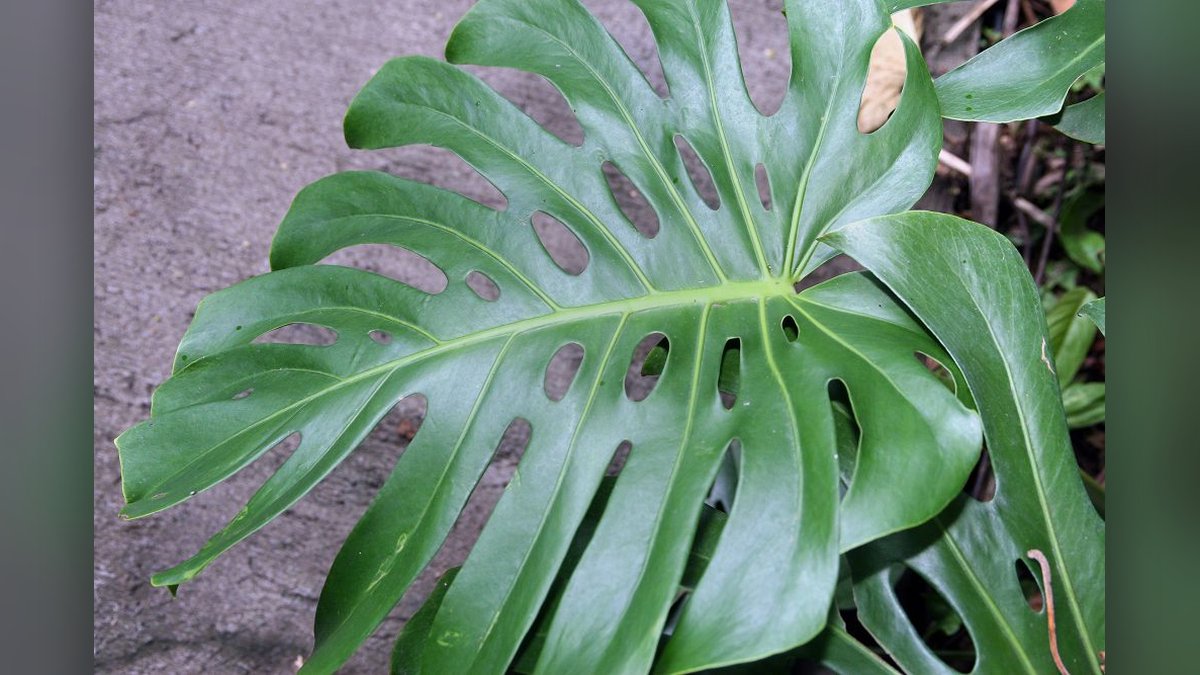
Wipe broad leaves with a damp cloth when dust accumulates so they can receive available light. Prune damaged or unruly growth with clean shears, cutting just above a node when shaping the plant. Avoid removing many healthy leaves at once. If the plant has outgrown its corner, our houseplant placement ideas can help you find a location that works for both the room and the plant.
How to Propagate Monstera Deliciosa
Monstera can be propagated by stem cuttings, air layering, or division. The essential detail is the node: a leaf and its stalk alone may stay green for a time, but they cannot produce a new vine without a piece of stem that includes a node and axillary bud. The University of Minnesota Extension guide linked above covers this distinction and notes that new leaves can take two to three months to appear even after rooting begins.
Propagation by Stem Cutting
- Choose a healthy section of stem with at least one node. A leaf and an existing aerial root are helpful, but the node is the nonnegotiable part.
- With clean, sharp pruners, cut about 1 to 2 inches below the node. Remove only foliage that would otherwise sit in the rooting medium.
- Place the node in water or a moist, well-draining medium such as perlite or potting mix. Keep the leaf above the water or medium.
- Set the cutting in a warm place with bright, indirect light. Change water if it becomes cloudy, or keep a solid medium moist but not waterlogged.
- Pot the cutting in an airy mix after it has developed a healthy root system and shows active growth. Do not assume failure if a new leaf takes longer than the first roots.
Propagation by Air Layering
Air layering lets a node begin forming roots while the stem remains attached to the parent plant, which can be reassuring when propagating a large or valuable section.
- Select a healthy node on the stem; a node with an aerial root is especially convenient.
- Wrap the node and aerial root, if present, with damp sphagnum moss, then secure the moss with clear plastic or reusable wrap while leaving a way to check moisture.
- Keep the moss lightly damp, not dripping, while the parent plant remains in its usual bright, indirect light.
- Once a visible network of healthy roots has developed through the moss, cut below the rooted node with clean pruners and pot the new plant in an airy mix.
Whichever method you choose, propagation is not an instant process. Warmth, light, and moisture all affect the pace, so watch the cutting or layer rather than relying on a rigid deadline.
Troubleshoot Common Monstera Problems
- Yellow leaves: Check for wet soil and poor drainage first, then consider low light or a naturally aging lower leaf.
- Brown, crispy edges: Look for severe dryness, fertilizer buildup, hot vents, or very dry air.
- Dark, spreading spots: Isolate the plant, keep foliage dry, improve airflow, and inspect roots if the mix remains wet.
- Small leaves or long gaps between leaves: Increase indirect light and add climbing support.
- Spider mites, scale, or thrips: Inspect both leaf surfaces and stems, quarantine affected plants, and treat promptly according to the product label.
One important safety note: the ASPCA lists Monstera deliciosa as toxic to cats and dogs because it contains insoluble calcium oxalates. Chewing can cause oral irritation, drooling, and difficulty swallowing, so place it beyond the reach of pets and young children. If exposure occurs, contact a veterinarian or poison-control professional.
A Maintenance Rhythm for Long-Term Success
- Weekly: Test the upper layer of soil and inspect new growth and leaf undersides for pests.
- Every few weeks: Rotate the pot, wipe dusty leaves, and check that ties are still loose.
- As stems extend: Guide new growth onto the support without forcing aerial roots.
- During spring and summer: Feed at the label rate and prune or propagate healthy growth as needed.
- When seasons change: Reassess light, watering, and humidity instead of carrying the same routine through the year.
Conclusion
Successful Monstera deliciosa care is less about constant attention than consistent observation. Give the roots both moisture and air, provide strong filtered light, and support the stem as it climbs; in return, this forgiving tropical can become a striking centerpiece for years. If you are building a larger collection, explore our starter houseplants for larger homes for compatible, approachable companions.
Discover more from Verdanscape
Subscribe to get the latest posts sent to your email.