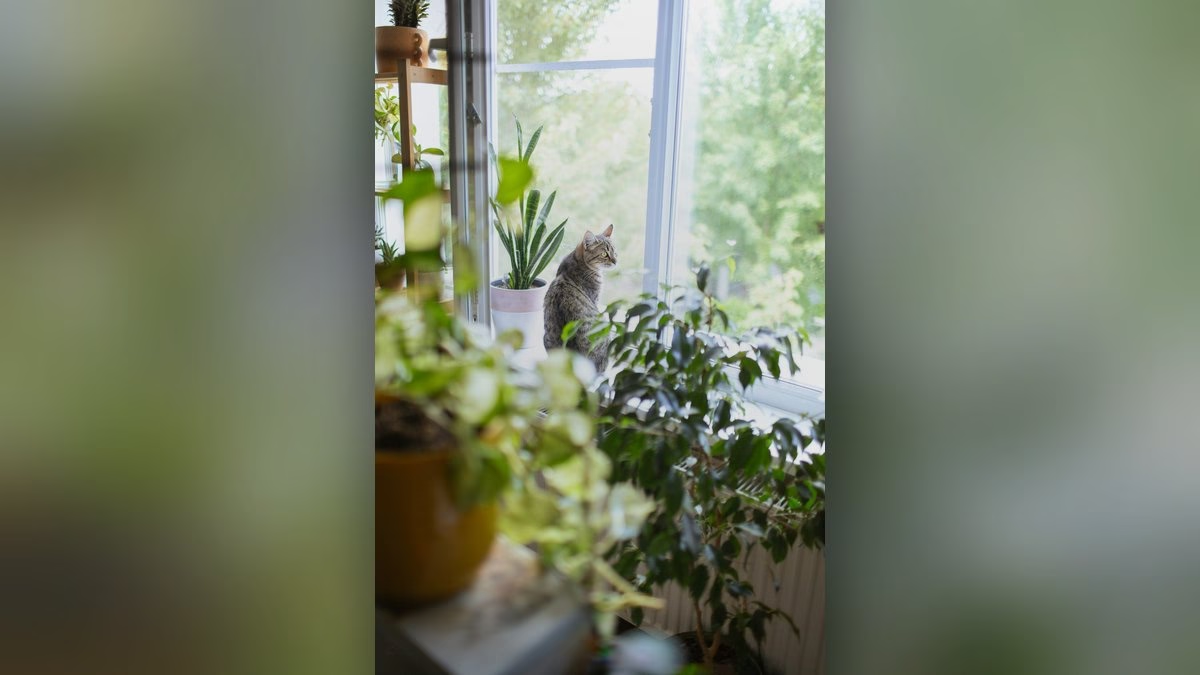
Sharing a home with curious cats or dogs does not mean giving up the indoor jungle. These pet safe houseplants are listed by the ASPCA as non-toxic to cats and dogs—but non-toxic does not mean edible, and sensible precautions still matter.
What “Pet Safe” Really Means
For this guide, “pet safe” means the plant is listed as non-toxic to cats and dogs in the ASPCA toxic and non-toxic plant database. The database also covers horses, but it does not establish safety for rabbits, birds, reptiles, or other animals. Owners of those pets should seek species-specific veterinary guidance.
“Non-toxic” does not mean “safe to eat” or “symptom-free.” Any fibrous plant material can cause stomach upset or choking when eaten in quantity, while fertilizers, pesticides, and decorative pot toppings create separate risks. The polka dot plant below is a useful example: the ASPCA classifies it as non-toxic while noting mild vomiting and diarrhea as possible clinical signs.
Botanical names are included because common names can be misleading, but plant databases and nursery labels may also use older synonyms. Check the scientific name before buying, search accepted names and synonyms when needed, and verify the exact plant against the database. If you suspect your pet has eaten an unsafe plant, contact your veterinarian or animal poison control promptly rather than waiting for symptoms.
10 Pet-Safe Houseplants for Cats and Dogs
The following choices combine ASPCA-listed non-toxic status with useful shapes, colors, and care styles. Choose the ones that suit your home’s actual light rather than forcing a favorite plant into the wrong location.
- Spider plant (Chlorophytum comosum): Arching striped leaves and dangling plantlets make this forgiving classic ideal for a bright shelf or hanging basket. Water when the upper inch of mix feels dry. Cats may be fascinated by the grassy leaves, so hang it out of reach to prevent damage and overeating.
- Parlor palm (Chamaedorea elegans): This compact palm adds soft, feathery height and tolerates medium indirect light. Let the surface dry slightly between waterings, but do not leave the root ball dry for long. It is a practical alternative to the highly dangerous sago palm, which is not a true palm.
- Rattlesnake plant (listed by the ASPCA as Calathea insignis): Patterned foliage brings plenty of drama without relying on flowers. This specific plant has its own ASPCA non-toxic entry; do not assume that status automatically applies to every member of the Marantaceae family. Give it bright indirect light, evenly moist mix, and higher humidity. Brown tips often point to dry air, inconsistent watering, or mineral-heavy tap water.
- Baby rubber plant (Peperomia obtusifolia): Thick, glossy leaves give this small plant a polished look on desks and side tables. Allow part of the potting mix to dry before watering. Do not confuse it with the rubber tree, Ficus elastica, which the ASPCA lists as toxic.
- Boston fern (Nephrolepis exaltata): A full Boston fern creates lush texture in a hanging planter or on a pedestal. Give it bright filtered light, steady moisture, and good humidity. Its fine fronds can shed, so place it where cleanup is easy.
- African violet (Streptocarpus section Saintpaulia): The ASPCA database still uses the older genus name Saintpaulia, while current taxonomy places African violets within Streptocarpus. Compact rosettes and colorful blooms suit small spaces. Bright indirect light and bottom watering help protect the fuzzy leaves from spotting; use a loose mix and keep the crown above the soil line.
- Moth orchid (Phalaenopsis species): Long-lasting flowers provide height and elegance without taking much surface area. Grow moth orchids in airy orchid bark, not ordinary potting soil, and water when the roots look silvery rather than green.
- Haworthia (Haworthia species): These small architectural succulents fit narrow ledges and bright windows with filtered light. Protect them from hot, prolonged direct sun, which can scorch or stress the foliage. Give them fast-draining mix and let it dry thoroughly between waterings. Their modest size also makes them easy to move away from an inquisitive pet.
- Ponytail palm (Beaucarnea recurvata): A bulbous trunk and fountain of narrow leaves create a playful silhouette. Despite its name, it is not a palm. Place it in bright light and water sparingly after the mix has dried well.
- Polka dot plant (Hypoestes phyllostachya): Pink, white, or red-speckled leaves add color to a plant grouping. Bright indirect light preserves the pattern, while regular pinching keeps growth compact. The ASPCA lists it as non-toxic but records mild vomiting and diarrhea as possible clinical signs, so discourage grazing. Water when the surface begins to dry.
Match Each Plant to Your Room
Non-toxic status is only one part of a successful choice. First, observe the room at several times of day. Moth orchids, peperomias, rattlesnake plants, African violets, and Haworthia appreciate bright indirect or filtered light; ponytail palms generally want the brightest position. Parlor palms can handle less light, although “tolerates low light” never means “needs no light.”
Then consider scale and traffic. A Boston fern can soften an empty corner, while an African violet is better for a compact table. For a more intentional arrangement, use Verdanscape’s guide to placing houseplants for beauty and plant health, then coordinate containers with the advice in our guide to choosing stylish plant pots.
Create a Safer Plant Setup
Even pet-safe houseplants benefit from a pet-aware setup. The University of Minnesota Extension suggests placing screen or perforated foil over potting soil to deter cats from digging. Stable, heavy-bottomed pots also reduce spills, while wall shelves and properly anchored hanging planters protect both plants and pets.
- Skip risky add-ons: Keep systemic pesticides, fertilizer granules, cocoa mulch, sharp stakes, and loose decorative stones away from pets.
- Provide an alternative: A pot of pet grass can redirect a cat that enjoys chewing greenery.
- Clean spills promptly: Do not let pets drink fertilizer solution or water collected in saucers.
- Inspect new arrivals: Quarantine plants briefly so pests are not introduced to your existing collection.
- Keep labels: Save the botanical name and a photo, making identification easier in an emergency.
Plants Pet Owners Should Treat with Extra Caution
Several popular houseplants are not pet-safe substitutes. Plants called “lilies” do not all pose the same hazard. The ASPCA explains that true lilies (Lilium) and daylilies (Hemerocallis) can cause life-threatening kidney injury in cats after very small exposures, including pollen or vase water. Peace lilies and calla lilies are unrelated plants that cause painful mouth and digestive irritation rather than the same kidney injury. Lily of the valley is also unrelated; its cardiac glycosides can cause dangerous heart-rhythm problems in both cats and dogs. Keep all of them away from pets. Sago palm, oleander, dieffenbachia, pothos, philodendron, and many Ficus plants also require caution.
This matters when combining new plants with an existing collection. If your goal is a fuller indoor landscape, start with a few verified plants and expand gradually. Verdanscape’s starter houseplants for larger homes can provide layout inspiration, but recheck every selection for your own animals before bringing it home.
A Green Home Everyone Can Enjoy
The best pet-friendly plant collection is both beautiful and manageable. Begin with one or two species matched to your light, learn their watering rhythms, and position them where paws and tails cannot topple the pots. With botanical-name checks and a few practical safeguards, plants and pets can comfortably share the same space.
Discover more from Verdanscape
Subscribe to get the latest posts sent to your email.